I2DB and the Department of Pediatrics are pleased to offer the Clinical Informatics Fellowship at WashU Medicine. The fellowship is accredited by the Accreditation Council for Graduate Medical Education (ACGME).
What is clinical informatics?
Clinical informatics is one of the newest subspecialties of the American Board of Medical Specialties. It focuses on biomedical data, computational systems, and clinical process improvement applied to medicine.
Why choose this fellowship?
The fellowship program exists to create leaders in health informatics. It is designed to meet the training requirements for ACGME board certification in clinical informatics and includes graduate coursework in biomedical informatics.
“The faculty are approachable and invested in allowing me to take on projects that I find interesting and useful. I feel that the fellowship has prepared me to contribute to the field
after graduation.”
Ready to get started?
Applications are open, and are due Oct. 1.
All of the following are required for consideration:
- Must have completed an ACGME-accredited residency or a Royal College of Physicians and Surgeons of Canada (RCPSC) or College of Family Physicians of Canada (CFPC)-accredited residency program.
- Must have a license to practice medicine and be eligible for a Missouri temporary or permanent license.
- Must be board-eligible or board-certified in your primary specialty
Applications to the clinical informatics fellowship program must be submitted through the Electronic Residency Application Service (ERAS). You can find the fellowship on the ERAS/AAMC website under Clinical Informatics (Pediatrics). Paper applications will not be accepted.
Applications to the WashU Medicine Clinical Informatics Fellowship Program for the 2026 cycle will open in July 2025 and be due by Oct. 1, 2025.
- Program Name: Washington University/B-JH/SLCH Consortium Program
- Specialty: Clinical Informatics (Pediatrics)
- ACGME ID: 3222832001
Interviews will occur from August to November. We participate in the AMIA Clinical Informatics Fellowship Match.
Applications must include:
- CV
- Personal statement
- Three letters of recommendation, including a letter from your division/department head or program director
- Medical school transcript
- MSPE/dean’s letter from medical school
- USMLE Transcript
For general questions, please contact Katie Bay at k.bay@wustl.edu.
Washington University encourages and gives full consideration to all applicants for admission, financial aid, and employment. The university does not discriminate in access to, or treatment or employment in, its programs and activities on the basis of race, color, age, religion, sex, sexual orientation, gender identity or expression, national origin, veteran status, disability, or genetic information.
Inquiries about compliance should be addressed to the University’s Vice-Chancellor for Human Resources, Washington University, Campus Box 1184, One Brookings Drive, St. Louis, MO 63130.
Fellows participate in designing and implementing electronic health records and clinical decision support systems at Barnes-Jewish Hospital and St. Louis Children’s Hospital. They also participate in research opportunities to advance the science of applied clinical health informatics, including presentations at local and national meetings, scientific papers for publication and grant applications. Working on and managing various projects is a significant component of the fellowship program.
Clinical Informatics Fellows will have the opportunity to earn a Graduate Certificate in Biomedical Data Science and AI. Fellows will also engage in rotations through a variety of areas based on their interests and experience, which have included:
- Center for Clinical Excellence at BJC HealthCare
- McDonnell Genome Institute
- Institute for Informatics, Data Science and Biostatistics
Program director
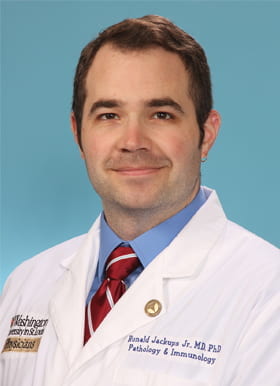
Ronald Jackups Jr, MD, PhD
Professor of Pathology & Immunology
Publications and research interests at profiles.washu.edu
- Email: rjackups@nospam.wustl.edu
Associate program directors
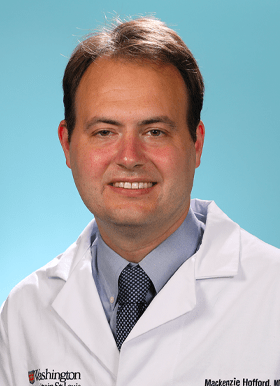
Mackenzie Hofford, MD
Associate Chief Research Information Officer, School of Medicine
Assistant Professor of Medicine, Division of General Medicine School of Medicine
- Email: mhofford@nospam.wustl.edu
Publications & Research Interests →
Key interests: Biomedical Informatics, Predictive Modeling, Internal Medicine, Chronic Diseases, Health AI, Clinical Informatics

Andrew P. Michelson, MD
Assistant Professor of Medicine, Division of Pulmonary and Critical Care Medicine
- Email: amichels@nospam.wustl.edu

Alexander S. Plattner, MD, MBA
Assistant Professor of Pediatrics, Infectious Disease
- Email: aplattner@nospam.wustl.edu
Publications & Research Interests →
Key interests: Clinical Decision Support, Patient Safety and Quality Improvement, Antimicrobial and Diagnostic Stewardship
Affiliated faculty
- Victor Brodsky, MD
- Geoff Cislo, MD
- Clay Dunagan, MD, MS
- Matthew Gerling, DO
- Divya Kapoor, MD
- Albert Lai, PhD, FACMI, FAMIA
- Kevin O’Bryan, MD
- David Molter, MD
- Vamsi Narra, MD
- Philip Payne, PhD, FACMI, FAMIA, FAIMBE, FIAHSI
- Dick Taylor, MD
- Michele Thomas, MD
- Adam Wilcox, PhD, FACMI
Trainees
- David Gootenberg, MD, PhD
Medical School: Harvard Medical School
Residency: Boston Children’s Hospital, Pediatrics - Patricia Hernandez, MD
Medical School: Pontifical Catholic University of Campinas
Residency: Washington University in St. Louis, Clinical Pathology - Oluwatobi Oyeneye, MBBS
Medical School: University of Lagos College of Medicine, Nigeria
Residency: Hennepin Healthcare System, Family Medicine
Training covers adult and pediatric patients at Barnes-Jewish Hospital and St. Louis Children’s Hospital, both using the Epic electronic health record system and Cerner Millennium laboratory information system. Fellows will also spend one month at the John Cochran Division Hospital of U.S. Veterans Affairs. Fellows are also expected to practice medicine part-time to maintain their clinical skills.
Washington University School of Medicine in St. Louis strives to support all learners, faculty and staff in the academic medical center in providing an environment conducive to learning, research and high-quality patient care. To report a concern regarding mistreatment or unprofessional behavior in the learning environment, please visit safereporting.wustl.edu.
If you’d like to learn more about our medical campus, the surrounding community, or St. Louis, please visit WashU Medicine’s About St. Louis page.
View current student resources.
Contact
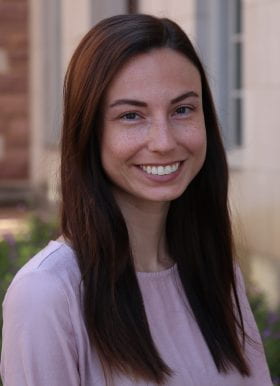
Katie Bay, MA
Senior Program Manager, Office of Health Information and Data Science
- Email: k.bay@nospam.wustl.edu
-
- Clinical Fellowship coordination
-
- BIDS Internship oversight
Who is eligible to apply?
Applicants must have completed an ACGME-accredited residency or a Royal College of Physicians and Surgeons of Canada (RCPSC) or College of Family Physicians of Canada (CFPC)- accredited residency program. We consider applicants from all types of residency programs! Applicants must also be eligible to work in the U.S.
What is the duration of the CI fellowship?
The duration of the fellowship is traditionally two years.
Can this fellowship be combined with other fellowships?
Yes! Our most commonly combined specialties are within pathology and pediatrics, but we encourage inquiries from other specialties as well.
Where can I learn about salary and benefits for fellows at WUSM?
Fellow benefit information can be found here and PGY stipend information can be found here.
Is the CI fellowship accredited?
Yes, our fellowship is accredited by ACGME. Fellows will be board-eligible candidates to sit for the clinical informatics subspecialty board examination upon successful completion of the fellowship.
What are a few examples of rotations that fellows complete while in the fellowship?
Fellows will rotate with a wide array of informatics units across the School of Medicine, Barnes-Jewish Hospital, St. Louis Children’s Hospital, and beyond. These rotations provide valuable experience in (but not limited to): clinical decision support, informatics research, electronic health records, pediatric informatics, medical imaging informatics, and data solutions and warehousing. We also offer a number of elective rotations, which are selected based on the fellows’ individual interests and goals.
How do clinical informatics fellows maintain their clinical skills?
Fellows will spend 20% of their time in their clinical specialty area to maintain clinical skills and deepen their experience in clinical environments.
What does the coursework component look like with this fellowship?
All fellows will complete a Graduate Certificate in Biomedical Informatics over the course of two years.
What are the fellows who completed this program doing now?
All of our “graduated” fellows work in an academic setting, most often as physician-scientists in their primary specialty at world-renowned universities.
What is it like to live in St. Louis?
In short, St. Louis is a very affordable city that has something to offer for everyone. St. Louis is often praised for providing the career and cultural opportunities of a big city with the convenience and low cost of living often found in smaller towns. Check out WashU Medicine’s About St. Louis page to learn more about living in St. Louis.
Who can I contact with additional questions?
Please reach out to the Senior Program Manager Katie Bay at k.bay@wustl.edu with any questions.
| Name | Year Graduated | Current Role |
| Kevin O’Bryan, MD | 2016 | Associate Professor of Pediatrics/CMIO at WashU Medicine/SLCH |
| Jeff Szymanski, MD, PhD | 2019 | Assistant Professor of Radiation Oncology at Mayo Clinic |
| Christopher Suciu, MD, MS | 2020 | Assistant Professor of Pathology and Laboratory Medicine at OHSU |
| Robert Bell, MD | 2022 | Assistant Professor of Clinical Pathology at UMich |
| Mackenzie Hofford, MD | 2022 | Assistant Professor of Internal Medicine/Associate CRIO at WashU Medicine |
| Matthew Gerling, DO | 2023 | Physician, Internal Medicine/Associate CMIO at BJC Medical Group |
| Alexander Plattner, MD, MBA | 2025 | Assistant Professor of Pediatrics at WashU Medicine |
| Christopher Zarbock, MD | 2025 | Assistant Professor of Pathology and Laboratory Medicine at Emory |