The Graduate Certificate in Biomedical Data Science and AI is designed for professionals who want to build technical fluency in health-related data analysis, artificial intelligence, and biomedical informatics. Whether you’re a researcher, analyst, clinician, or industry professional, this flexible, part-time program will expand your impact in data-driven health care without committing to a full degree.

What you’ll learn
- Process and analyze health and biomedical data
- Apply AI and machine learning to real-world problems
- Extract and communicate actionable insights from large datasets
- Translate data into improved clinical, research, or public health outcomes
Why choose this certificate?

Designed for working professionals
evening, part-time format, can be completed within 4 semesters part-time

Stackable with the master’s program
share core credits if you later pursue the full degree

Collaborative and interdisciplinary
connect with peers in informatics, biostatistics, and data science

Career-aligned specializations
choose a pathway that matches your goals

Taught by world-class WashU faculty
our instructors are active researchers, NIH-funded scientists, and thought leaders in health data innovation
Ready to get started?
Applications open Sept. 1 for fall admission only, and are due July 15.
The Graduate Certificate in Biomedical Data Science and AI offers three distinct concentrations, allowing students to tailor their training to align with their interests and career goals. After completing a shared first semester of foundational coursework, students select one of the following tracks to dive deeper into advanced topics:
Each concentration equips students with the tools and perspectives needed to lead in the rapidly evolving landscape of healthcare, research, and artificial intelligence. Whether your passion lies in clinical applications, statistical research, or AI innovation, our program provides a robust and flexible pathway to success.
The Certificate in Biomedical Data Science and AI requires 18 credit hours and begins in the fall semester. You’ll complete four core courses and three specialization courses in your area of interest.
Core courses: 9 credit hours
| Core Courses | Credit hours |
|---|---|
| R for Data Science | 1 |
| Python for Data Science | 1 |
| Introduction to Biomedical Data Science | 2 |
| Fundamentals of Biostatistics | 2 |
| Introduction to Biomedical Informatics | 2 |
| Seminar Series or Journal Club | 1 |
Specialization pathways: 9 credit hours
Choose one of the following areas of focus:
| Biomedical Informatics | Biostatistics | Data Science |
|---|---|---|
| Electronic Health Record Foundations(3) | Advanced Topics in Biostatistics (3) | Data Visualization (3) |
| Multi-Omics Analysis (3) | Statistical Analysis of Longitudinal and Survival Data (3) | Advanced Data Science & Artificial Intelligence (3) |
| Electronic Heath Record Analysis (3) | Survival Analysis (3) | Biomedical Data Mining (3) |
| Elective (3) (advisor-approved) | Elective (3) (advisor-approved) | Elective (3) (advisor-approved) |
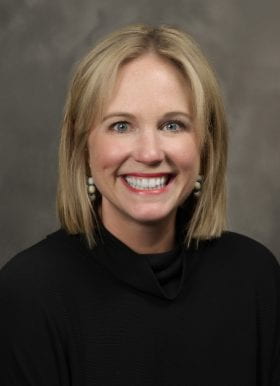
Sara O’Neal, PhD, MEd
Associate Director of Education
- Email: saraoneal@nospam.wustl.edu
- MS and certificate program oversight
- Strategic direction and academic policies

Shelby Cripe, MA
Senior Program Manager
- Email: skcripe@nospam.wustl.edu
- Curriculum planning and advising
- Academic support for current students

Giulina Sertl
Manager of Marketing and Student Recruitment
- Email: gsertl@nospam.wustl.edu
- Marketing and prospective student outreach
- Application requirements and admissions questions
Program director

Zachary Abrams, PhD
Instructor of Biostatistics
- Email: abramsz@nospam.wustl.edu
Publications & Research Interests →
Key interests: AI, Translational Bioinformatics, NLP, Clinical Informatics